Why Payroll Integration for Staffing Firms Is the Key to Operational Efficiency
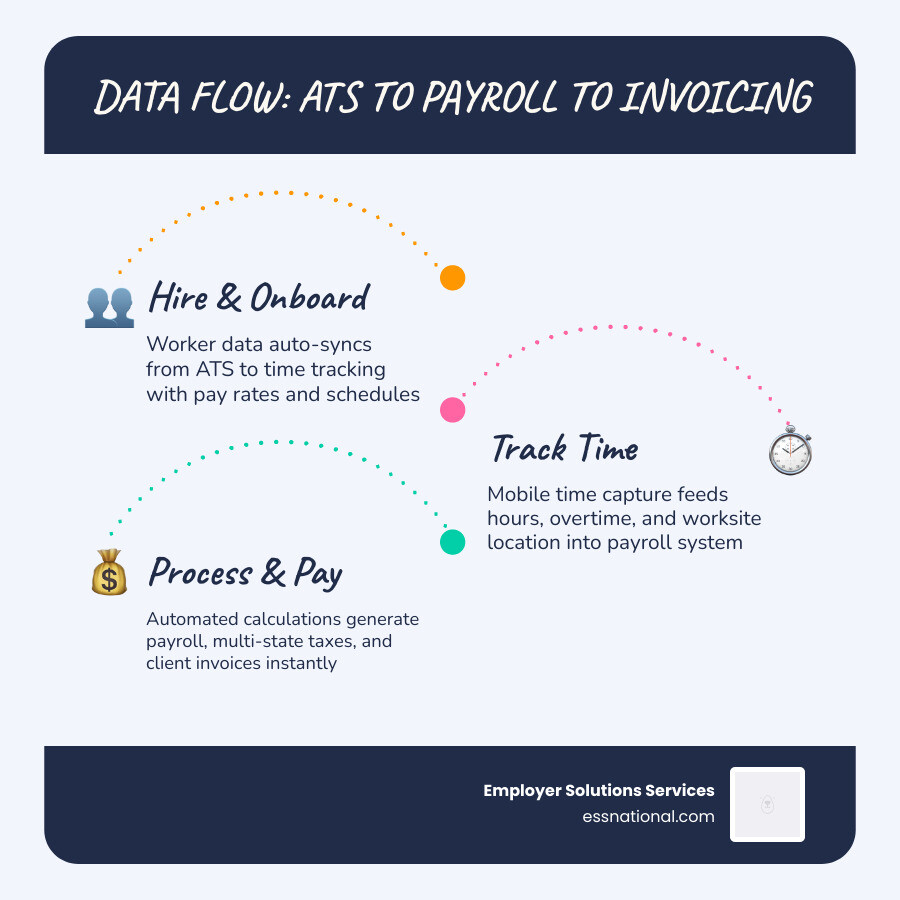
Payroll integration for staffing firms is the process of connecting your applicant tracking system (ATS), time tracking tools, and payroll software into one automated workflow — eliminating manual data entry, reducing errors, and keeping you compliant across every state where your workers are placed.
If you’re trying to streamline operations fast, here’s what you need to know:
- What it does: Automatically moves worker data from hiring through timekeeping to payroll and invoicing
- Why it matters: Staffing payroll is far more complex than standard payroll — with variable pay rates, weekly cycles, high worker turnover, and multi-state tax rules that follow the work location, not the worker’s home address
- Key benefit: Agencies that implement integrated payroll systems have cut payroll cycle times by nearly two days and reduced processing errors to below 1%
- Who needs it: Any staffing agency managing temp workers, contractors, or multi-state placements that still relies on manual exports, spreadsheets, or disconnected software
Running a mid-sized staffing operation without integrated payroll is like trying to fill orders from a warehouse with no inventory system. Things get missed. Workers get paid late. Clients get billed wrong.
The good news? Building a customized, integrated payroll solution is more achievable than most agency owners think — and the payoff is significant.
This guide walks you through exactly how to do it.
Payroll integration staffing firms definitions:
- direct placement healthcare workers
- direct placement staffing services
- direct placement temp warehouse
Why Payroll Integration for Staffing Firms is Essential in 2026
By May 2026, the staffing landscape has become a high-speed environment where manual processes are no longer just an “inconvenience”—they are a financial liability. For agencies operating in states like Florida, Texas, or New Jersey, the complexity of managing a flexible workforce requires a system that can think as fast as you recruit.
Multi-State Compliance and High Worker Churn
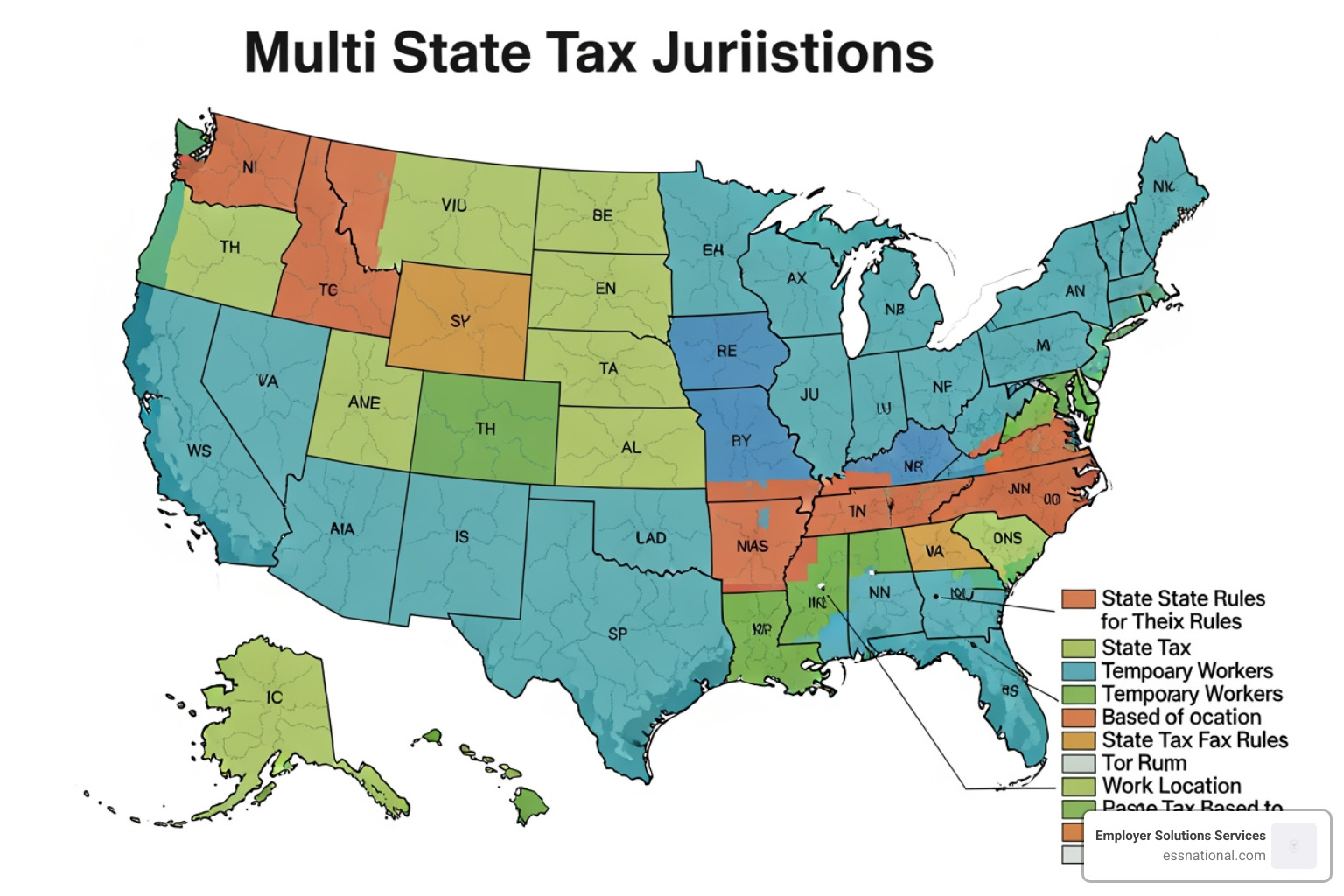
Staffing agencies face a unique “revolving door” of talent. You might hire 50 workers on Monday, lose 10 by Wednesday, and re-hire another 15 by Friday. Traditional payroll systems often struggle to keep up with this volume of hire/re-hire cycles. Furthermore, payroll services and why you need them become critical when you realize that tax rules for temporary workers often follow the work location rather than the home address. If your agency is based in Pennsylvania but sends workers to a job site in New Jersey, your payroll system must be smart enough to pivot tax withholdings instantly.
Variable Pay Rates and Real-Time Visibility
Unlike a standard business where employees have a fixed salary, staffing involves shift differentials, piecework, and blended overtime calculations. Without payroll integration staffing firms, these variables must be calculated by hand, leading to a high probability of “human-in-the-loop” errors. Integration provides real-time data visibility, allowing you to see your gross profit margins on every placement the moment a timesheet is approved.
Step 1: Auditing Your Current Staffing Tech Stack
Before you can build a customized solution, you need to look under the hood of your current operations. Most agencies start with an Applicant Tracking System (ATS) or CRM like Bullhorn, but the “disconnect” happens when that data has to move to the back office.
ATS/CRM Synchronization and Manual Data Entry Risks
Are your recruiters entering candidate data into one system, while your payroll clerk types that same data into another? This “double entry” is the primary source of errors. In fact, some firms have reported that moving away from manual entry reduced their payroll processing time from over eight hours to just a matter of minutes. When you pick the perfect small business payroll system, you must ensure it offers a bidirectional sync. This means when a recruiter updates a worker’s address or pay rate in the ATS, the payroll system updates automatically.
Error Rate Reduction
The goal is to move toward a “zero-error” environment. Industry leaders maintain a payroll processing error rate of less than 1%. If your current error rate is higher, it’s likely because your tech stack is fragmented. By streamlining your back office with integrated staffing technology, you remove the friction points where data typically gets lost or corrupted.
Step 2: Implementing Seamless Payroll Integration for Staffing Firms
Once the audit is complete, the implementation phase begins. This is where we move from “generic” payroll to a system built specifically for the staffing industry’s unique demands.
Key Features of Payroll Integration for Staffing Firms
A truly customized solution isn’t just about “sending data.” It’s about having a system that understands the nuances of the job. You should look for:
- Bidirectional Data Sync: Ensures information flows both ways between your front-office ATS and back-office payroll.
- Automated Onboarding: Allows new hires to complete their paperwork via mobile, with data flowing directly into the payroll engine.
- Complex Pay Scenarios: Specialized “payroll wizards” should handle shift differentials, piecework, and blended overtime without manual intervention.
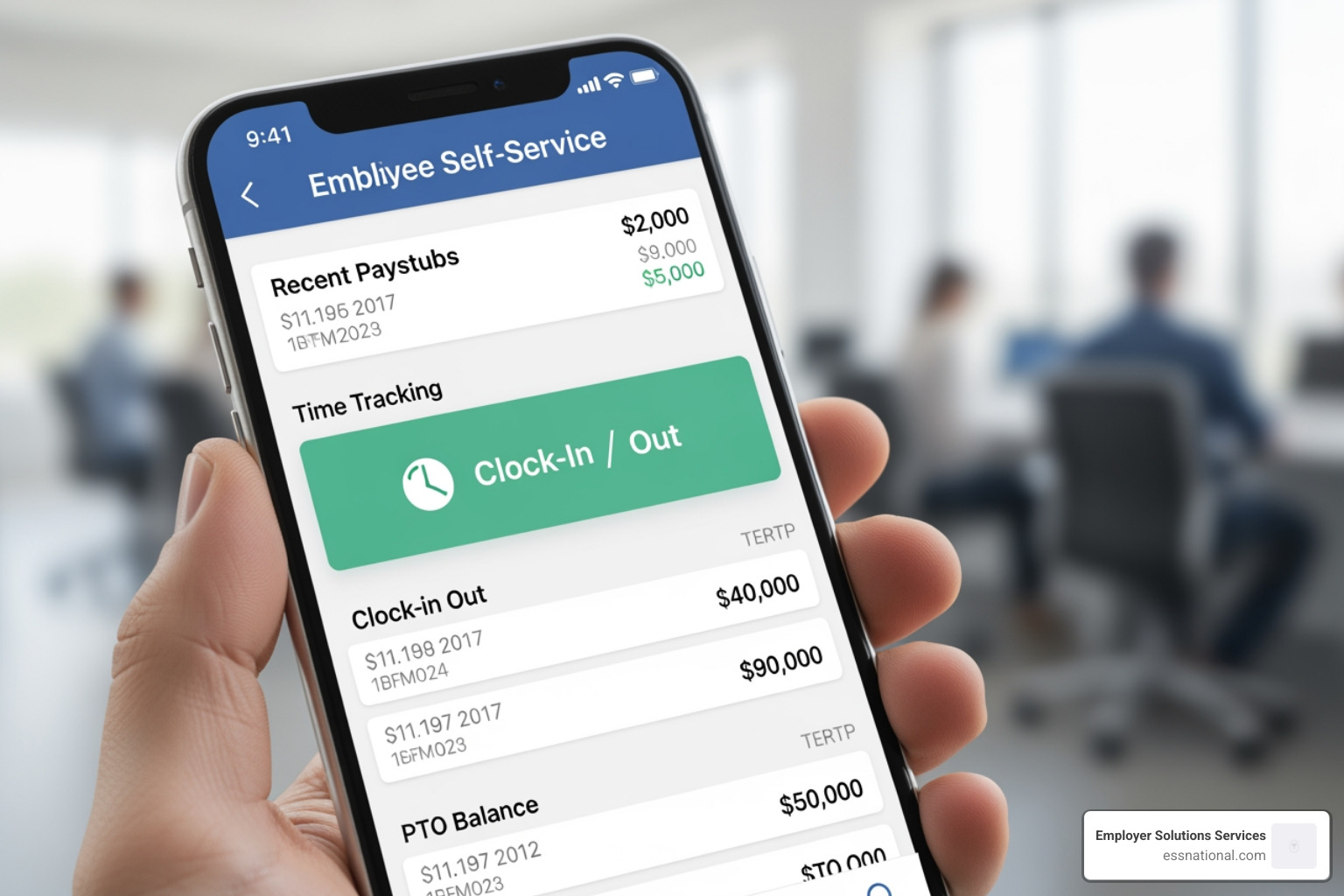
- Employee Self-Service: In 2026, workers expect lifetime access to their W-2s, paystubs, and PTO balances via a mobile app. This reduces the administrative burden on your internal staff by empowering workers to find their own answers.
Managing Multi-State Tax Compliance
For agencies in our service areas—such as Georgia, Illinois, and Massachusetts—tax compliance is a moving target.
- Worksite-Based Tax Mapping: The system must automatically assign tax codes based on the specific GPS coordinates or zip code of the client’s worksite.
- Geolocation Tools: These help ensure that local taxes (like Pennsylvania’s PSD codes) are applied accurately based on where the work is actually performed.
- Local Tax Updates: Laws change frequently. An integrated system should auto-update tax codes and accruals for things like paid sick leave based on the worker’s current assignment. If you are operating in the Garden State, you need to master New Jersey payroll without losing your mind by using a system that stays ahead of local legislative shifts.
Step 3: Optimizing Back-Office Workflows and Funding
The back office is where the profit is either protected or lost. Integration allows you to turn your administrative department into a lean, profit-monitoring machine.
Streamlining Time Tracking and Invoicing
The “time-to-money” gap is a major hurdle for staffing firms. By integrating your timekeeping (whether through mobile capture or a Vendor Management System/VMS) directly with payroll and invoicing, you accelerate revenue recognition.
| Feature | Manual Processing | Integrated Automation |
|---|---|---|
| Data Entry | Manual typing (High error risk) | Automated sync (Low error risk) |
| Cycle Time | 3-5 days | 1-2 days |
| Tax Compliance | Manual lookups | Automated geolocation |
| Invoicing | Delayed until payroll ends | Generated simultaneously |
Whether you need New Jersey payroll services for every small business or solutions in Nevada, the goal is the same: eliminate the wait. When timesheets are approved on Friday, invoices should be ready by Monday.
Leveraging Payroll Funding for Growth
A challenge for growing agencies is cash flow. You have to pay your workers weekly, but your clients might not pay their invoices for 30, 60, or even 90 days. This is where payroll funding becomes a game-changer. Integrated solutions often include “selective invoice financing” or “payroll funding” options. This allows you to receive an advance of up to 97% of your invoice value almost immediately. This working capital ensures you can cover wages, taxes, and insurance without draining your bank account. If you’re looking for a partner, the ultimate guide to payroll companies in Florida highlights how essential this funding is for scaling in competitive markets.
Measuring ROI and Long-Term Success
How do you know if your payroll integration staffing firms strategy is actually working? You look at the metrics that matter most to your bottom line.
Reducing Administrative Burden in Payroll Integration Staffing Firms
The most immediate impact is the reduction in “administrative drag.” We have seen firms with 5,000 employees shorten their payroll cycle by nearly two full days after automating their tax compliance and data flows.
- Cycle Time Reduction: Freeing up your team to focus on recruiting rather than data entry.
- Error Rates: Aim for under 1%. Fewer errors mean fewer “emergency” off-cycle checks and happier workers.
- Talent Retention: In 2026, workers will leave an agency over payroll mistakes. Accurate, on-time pay and a functional self-service portal are key retention tools.
- Scalability: A truly integrated system allows you to scale from 50 to 5,000 workers without necessarily hiring more back-office staff.
When you use the best small business online payroll tools of 2026, you gain access to business intelligence dashboards. These tools allow you to track placement costs, employer taxes, and benefits in real-time, giving you a clear picture of your agency’s health.
Frequently Asked Questions about Staffing Payroll
How does payroll integration handle multi-state taxes?
Modern integrated systems use geolocation technology to map work locations to specific tax jurisdictions. When a worker moves from a site in Philadelphia to a site in Cherry Hill, the system detects the change in the ATS and automatically updates the tax withholdings and local accruals in the payroll engine.
What is the difference between a PEO and an EOR for staffing?
A Professional Employer Organization (PEO) is a co-employment model where you share liabilities and benefits. An Employer of Record (EOR) takes on the full legal responsibility for the employees. For many staffing firms, an EOR or “payroll transfer” model is preferred because it offloads all tax, insurance, and compliance liability to the provider while you maintain operational control over the talent.
Can I integrate my existing ATS with new payroll software?
In most cases, yes. Leading platforms like Bullhorn have open APIs that allow for seamless integration with specialized payroll engines. The key is to ensure the integration is “bidirectional,” so data doesn’t just flow out, but also updates back into your CRM for accurate reporting.
Conclusion
Building customized payroll staffing solutions isn’t just about buying software; it’s about creating a system that supports your growth rather than hindering it. At Employer Solutions Services (ESS), we bring over 30 years of experience to the table, helping agencies navigate the complexities of the staffing and HR solutions industry.
We understand that every agency is different. Whether you need temporary, temp-to-hire, or direct-hire staffing, our customized programs are designed to provide screened and trained talent backed by a rock-solid back office. From the high-rises of Chicago, Illinois, to the industrial hubs of Atlanta, Georgia, and the bustling markets of Texas and Nevada, we are here to ensure your payroll is the strongest link in your operational chain.
Ready to reclaim your time and protect your margins? Explore our services and let’s build a payroll solution that works as hard as you do.