
Why Texas Facilities Staffing Is a Growing Crisis You Can’t Ignore
Texas facilities staffing has reached a critical pressure point. Vacancy rates are climbing, turnover is expensive, and the pipeline of qualified nurses and aides isn’t keeping pace with demand.
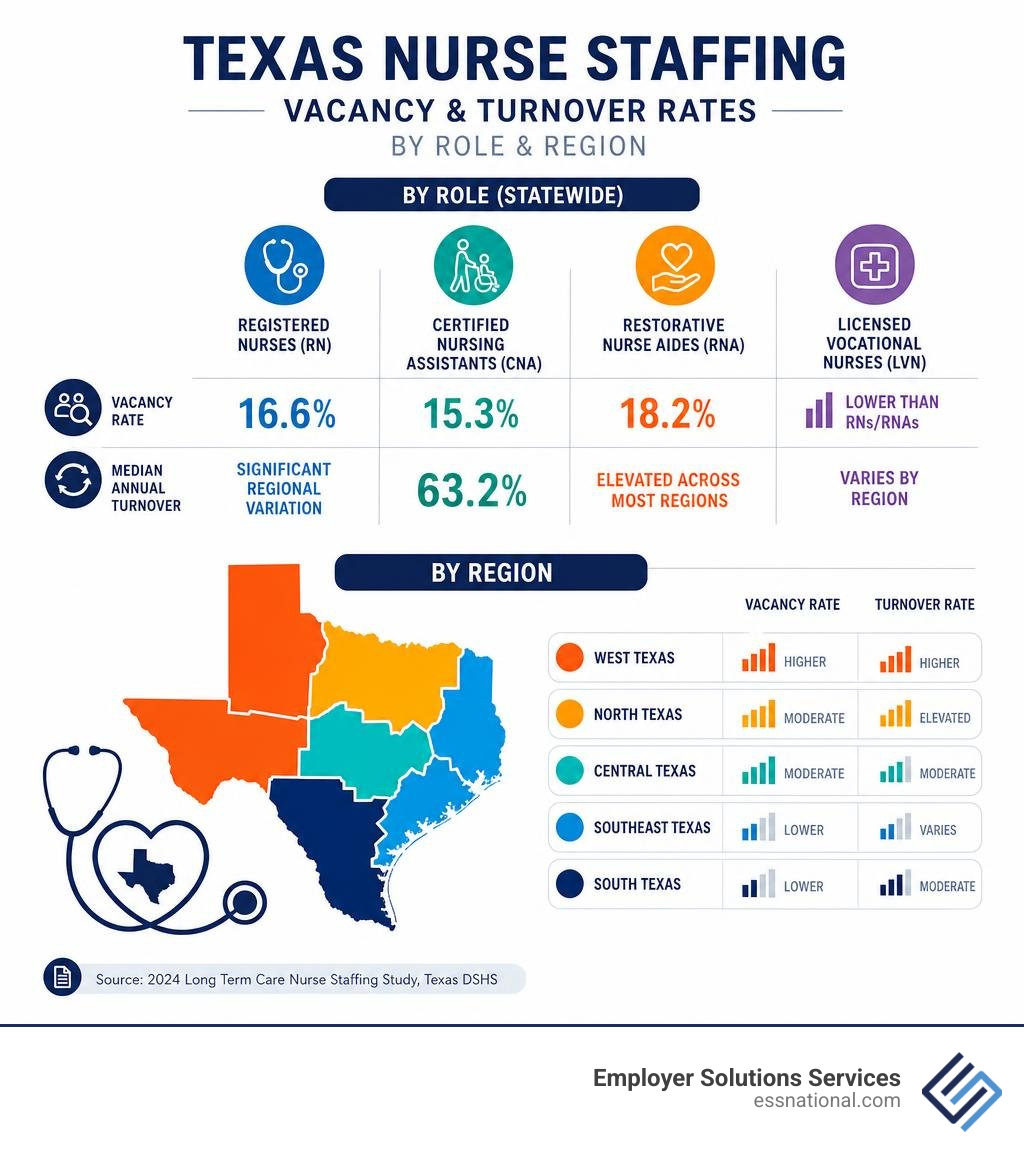
Here’s a quick snapshot of where things stand right now:
| Staff Type | Vacancy Rate | Median Annual Turnover |
|---|---|---|
| Registered Nurses (RN) | 16.6% | Significant regional variation |
| Certified Nursing Assistants (CNA) | 15.3% | 63.2% |
| Restorative Nurse Aides (RNA) | 18.2% | Elevated across most regions |
| Licensed Vocational Nurses (LVN) | Lower than RNs/RNAs | Varies by region |
Source: 2024 Long Term Care Nurse Staffing Study, Texas DSHS
These aren’t just numbers. A 63.2% CNA turnover rate means the average facility replaces most of its frontline care staff every single year. That drives up overtime costs, strains remaining staff, and puts resident care quality at risk.
Texas hospitals are feeling it too. Nearly half — 48.8% — increased their budgeted RN headcount in the past year, primarily because of rising patient volume and acuity. Hospitals are planning to add over 9,300 new RN positions in the next fiscal year alone.
For mid-sized facility operators and healthcare administrators, this isn’t a background issue. It’s a daily operational challenge that affects budgets, compliance, and patient outcomes.
This guide breaks down exactly what’s driving the shortage, which regions are hit hardest, what staffing models actually work, and how to build a smarter, more stable workforce.
Navigating the Challenges of Texas Facilities Staffing Texas
Managing a healthcare facility in Texas is a balancing act. On one side, we have strict regulatory guidelines and high patient expectations. On the other, we face a highly competitive, volatile labor market. Securing reliable Texas facilities staffing Texas solutions is no longer just about filling open shifts; it is about keeping your facility operational, compliant, and financially viable.
According to the 2024 Long Term Care Nurse Staffing Study – Vacancy and Turnover, long-term care facilities across the state are battling high vacancy and turnover rates. The staff mix in these facilities heavily relies on frontline care providers. Certified Nursing Assistants (CNAs) make up 56.2% of the direct resident care staff, while Registered Nurses (RNs) account for only 7.2%.

When vacancy rates climb, the remaining staff must pick up the slack. This leads to burnout, which in turn drives higher turnover—a compounding cycle that costs Texas facilities millions of dollars in recruiting, onboarding, and contract labor expenses.
Sourcing Qualified Talent Through Texas Facilities Staffing Texas
To break this cycle, we must understand the unique challenges associated with sourcing each role in the nursing staff hierarchy:
- Registered Nurses (RNs): Sourcing RNs for direct resident care (DRC) is exceptionally difficult. Long-term care facilities report that DRC RN positions take the longest to fill compared to any other role. With hospitals offering highly competitive packages, long-term care facilities must find creative ways to attract these professionals.
- Licensed Vocational Nurses (LVNs): LVNs are vital to the daily clinical operations of Texas facilities. While their vacancy rates are generally lower than those of RNs, they still face significant regional shortages.
- Certified Nursing Assistants (CNAs): CNAs are the backbone of direct resident care, yet they suffer from a staggering statewide median turnover rate of 63.2%. Sourcing CNAs requires a constant, active recruitment pipeline and a focus on entry-level engagement.
- Advanced Practice Registered Nurses (APRNs): Though they make up a smaller percentage of the overall healthcare staff mix, finding specialized APRNs for clinical leadership roles remains a highly competitive endeavor.
Regional Disparities in Vacancy and Turnover Rates
Staffing challenges do not look the same in Amarillo as they do in Houston. Texas is vast, and its public health regions experience vastly different labor dynamics:
- The Panhandle: This region has historically reported lower vacancy rates than the statewide average for most nursing staff types. However, its rural nature means that when a vacancy does occur, the talent pool is much smaller, making specialized roles exceptionally difficult to fill.
- East Texas: East Texas facilities face some of the most severe retention challenges in the state. According to state data, the region hit a median turnover rate of 100% for direct resident care RNs. This means facilities in this region are constantly rehiring for the same core positions.
- The Gulf Coast: Home to major metropolitan areas like Houston, this region experiences intense competition. The Gulf Coast has reported the highest median turnover for direct resident care LVNs at 66.7%, driven by workers easily jumping to competing facilities for minor wage increases.
- North Texas: With the rapid population growth in the Dallas-Fort Worth metroplex, North Texas facilities face soaring patient volumes. This drives up the demand for all levels of nursing staff, making local recruitment highly competitive.
Projected Workforce Needs and Specialized Staffing Gaps
As we look ahead through the remainder of 2026 and into 2027, the demand for healthcare services in Texas is projected to rise. This increase is driven by two main factors: an aging population requiring more complex care, and a growing general population across major metropolitan areas.
According to the 2024 Hospital Nurse Staffing Study, 48.8% of Texas hospitals reported an increase in budgeted direct patient care RN FTEs (Full-Time Equivalents). When asked why they needed more staff, the answers were clear:
- Patient Volume (85.2%): More people are walking through the doors of Texas hospitals and clinics.
- Patient Acuity (51.4%): Patients are sicker and require more intensive, specialized care.
- New Beds (33.8%): Facilities are physically expanding to meet demand, requiring entirely new units to be staffed.
Future Staffing Projections for 2026 and Beyond
The numbers paint a clear picture of what Texas facilities must prepare for. In the hospital sector alone, facilities have planned to add:
- 9,345 new RN FTEs
- 427.8 LVN FTEs
- 639 Nurse Aide (NA) FTEs
In the long-term care sector, the outlook is equally demanding. Over 60.6% of nursing facilities project they will need more CNAs over the next two years, and 50.9% expect to need more direct resident care RNs. Meeting these numbers requires a shift away from reactive hiring toward proactive, strategic workforce planning.
Overcoming Gaps in Specialized and Entry-Level Roles
It is not just about the number of warm bodies in the building; it is about having the right skills on the floor. Texas facilities face severe bottlenecks in two key areas:
1. Hard-to-Fill Specialty Units
Specialized units like the Pediatric ICU (PICU), Neonatal ICU (NICU), and psychiatric units take much longer to staff. In 2022, a staggering 72.7% of Texas hospitals took 91 or more days to fill open pediatric ICU positions. While that number improved to 21.3% in 2024, specialized roles still represent a massive scheduling risk for administrators.
2. Curriculum and Skill Gaps in New Graduates
Many facilities report that newly licensed nurses lack critical operational skills. Specifically, 29.2% of hospitals identified a lack of critical thinking skills in newly licensed nurses, while 27.4% noted gaps in clinical experience, and 19.3% cited communication challenges.
To bridge these gaps, forward-thinking facilities are shaking up their onboarding practices. Rather than throwing new hires straight into the deep end, we are seeing the integration of virtual simulation components, extended mentorship programs, and structured clinical partnerships to help transition new graduates safely into high-stress environments.
Strategic Recruitment, Retention, and Compensation Models
To stay competitive in the Texas market, facilities must align their compensation structures with current state benchmarks. Sourcing talent is only half the battle; keeping them is where the real return on investment lies.

Historically, facilities relied heavily on sign-on bonuses to attract talent. However, state data reveals a shifting trend: sign-on bonus usage in hospitals dropped from 81.7% in 2022 to 67.7% in 2024. Why? Because while a sign-on bonus might get a nurse through the door, it does little to keep them there once the initial payout is complete.
Instead, successful facilities are shifting their budgets toward sustainable, long-term retention strategies.
| Staff Type | Median Hourly Wage (Experienced) | Primary Retention Challenge | Key Retention Driver |
|---|---|---|---|
| Registered Nurse (RN) | $38.00 (LTC) / Higher in Hospitals | High vacancy in rural areas | Career ladders, tuition reimbursement |
| Licensed Vocational Nurse (LVN) | $28.00 – $32.00 | Regional competition | Shift differentials, predictable scheduling |
| Certified Nursing Assistant (CNA) | $16.00 – $19.00 | High turnover (63.2% statewide) | Employee recognition, wellness programs |
Effective Retention Initiatives for Direct Care Staff
If you want to lower your turnover rates, we recommend focusing on the initiatives that yield the highest employee satisfaction:
- Paid Time Off (PTO): Over 91.2% of long-term care facilities and 95.6% of hospitals utilize generous PTO policies as a core recruitment and retention tool. Giving staff time to recharge is the single most effective way to combat burnout.
- Shift Differentials: Offering premium pay for night, weekend, and holiday shifts helps ensure consistent coverage on hard-to-staff shifts without relying on last-minute contract labor.
- Career and Clinical Ladders: Providing clear pathways for professional growth—such as helping a CNA transition to an LVN, or an LVN to an RN—keeps ambitious talent within your organization.
- Wellness and Mental Health Programs: Healthcare is stressful. Implementing trauma-informed care support systems, counseling access, and wellness programs helps staff manage the emotional weight of their roles.
Leveraging Reentry Programs and Public Workforce Systems
We cannot overlook the power of local and state workforce resources. Texas employers can tap into public systems to widen their talent pipelines, especially for entry-level, administrative, and facilities maintenance roles.
Programs like Workforce Solutions and WorkInTexas.com provide direct access to local job seekers, resume matching services, and hiring events. For facilities management, the Careers at Texas Facilities Commission provides a model for structured public employment pipelines, offering state-paid health insurance, retirement benefits, and clear eligibility pathways.
Additionally, technical colleges and community reentry programs offer an excellent, underutilized talent pool. By partnering with local training programs, facilities can provide clinical rotation sites, creating a direct pipeline of hungry, qualified graduates who are ready to work from day one.
Evaluating Staffing Models: Interim, Contract, and Temp-to-Hire
When a shift is empty, administrators have to make a choice: do we call in an internal float pool, hire a contract nurse, or look for a temporary-to-hire option?
Each staffing model has distinct financial and operational implications:
In 2023, Texas hospitals spent a staggering $572,919,792.60 on contract RN and LVN FTEs. While contract labor is an invaluable tool to maintain patient safety during sudden volume surges, relying on it as a permanent staffing model is financially unsustainable.
This is why many Texas facilities are transitioning to a temp-to-hire model. This approach allows you to bring in screened, qualified professionals on a temporary basis. You can evaluate their clinical skills, reliability, and cultural fit within your facility before making a permanent job offer. It bridges the gap between immediate staffing needs and long-term workforce stability.
Meeting Regulatory Demands with Texas Facilities Staffing Texas
Beyond the financial considerations, staffing levels directly impact regulatory compliance. State and federal agencies closely monitor nurse-to-patient ratios and minimum staffing standards.
Inadequate staffing doesn’t just lead to employee burnout; it results in severe regulatory penalties, lower quality of care ratings, and compromised patient safety. By partnering with a specialized staffing agency, we can help you maintain consistent, compliant staffing levels, ensuring your facility remains a safe environment for both patients and staff.
Frequently Asked Questions about Texas Facility Staffing
What are the primary drivers of nurse staffing shortages in Texas?
The shortage is driven by a combination of a rapidly growing and aging state population, high rates of burnout among frontline caregivers, and a competitive labor market where nurses have numerous employment options outside of traditional bedside care.
How do contract labor costs impact Texas healthcare facilities?
Contract labor is highly expensive and can quickly drain a facility’s operating budget. While necessary for short-term coverage, excessive reliance on contract agency staff reduces financial sustainability and can create tension with permanent staff who earn lower hourly wages.
What role does the state play in monitoring nursing workforce data?
The Texas Center for Nursing Workforce Studies (TCNWS) at the Department of State Health Services (DSHS) regularly conducts comprehensive surveys, such as the upcoming 2026 Nursing Facility Nurse Staffing Study, to collect data on vacancies, turnover, and wages. This data is utilized by state legislators to make informed policy recommendations and allocate resources to healthcare training programs.
Conclusion: Build a Stronger Workforce with Employer Solutions Services
Navigating the complexities of Texas facilities staffing Texas requires more than just posting job ads and hoping for the best. It requires a strategic, data-driven partner who understands the local labor market, regulatory demands, and the unique operational challenges of running a healthcare or commercial facility.
At Employer Solutions Services (ESS), we bring over 30 years of experience to the table. We don’t believe in one-size-fits-all solutions. We work closely with you to design customized staffing programs—whether you need temporary coverage, temp-to-hire flexibility, or direct-hire placements.
Our deep expertise extends beyond sourcing screened, trained talent; we also handle back-office administration, including comprehensive payroll services, freeing up your internal team to focus on what they do best: delivering exceptional care.
Don’t let vacancy rates and high turnover compromise your facility’s operational success. Partner with a trusted Texas staffing agency today, and let us help you build a stable, compliant, and thriving workforce.